1. What is Self-Custody and Why It Matters
Crypto promised ownership. Not just a balance in a bank or exchange - but truly your money, under your control. That promise only comes alive when you hold your own keys. That’s self-custody.
Self-custody means the user (or business) - not a third-party exchange or “custodial gateway” - controls the private keys / seed phrases that grant access to funds. Everything else - pooled wallets, custodial services, or custodial gateways - creates layers between you and your assets.
In a world where exchanges get hacked, gateways freeze funds, or (worst-case) go insolvent — self-custody remains the only way to guarantee you truly own your crypto.
2. Custodial vs Self-Custodial: The Tradeoffs
Before we explain why inabit favors self-custody, let’s examine the common custody patterns and their tradeoffs:
Custodial / Pooled Gateways
Pros: Very easy to use - integration is quick, UI is polished, fiat on/off ramps handled.
Cons: You don’t control the keys. Your funds are commingled with others. You rely on the provider’s solvency, security practices, and honesty. Many custodial services create a single point of failure — if they get hacked, or go down, everyone may suffer.
Infrastructure SDKs or “DIY” Wallets
Pros: Full control over keys. You build exactly the wallet and custody logic you want.
Cons: Requires heavy engineering work. You need to build secure key management, safe signing logic, backups, user flows, maybe multisig - it’s costly and time-consuming. For many companies, hitting market quickly is more important than re-inventing wallet infrastructure.
The Middle Ground - What inabit Offers
What if you could get the ease-of-use and speed-to-market of a gateway + the security and control of self-custody? That’s where inabit comes in: a hybrid solution bridging the gap.
3. The Security Risks of Custody - What Can Go Wrong
Relying on custodial services or pooled wallets carries serious, well-documented risks:
Exchange or gateway hacks - third-party wallets have been compromised in the past, losing users’ funds.
Insider risk & mismanagement - a compromised employee, sloppy security practices, or misconfiguration can jeopardize an entire pool.
Regulatory and insolvency risk - in some jurisdictions custodial providers might be forced to freeze funds, or face legal pressure that affects user assets.
Transparency issues — you often don’t know exactly how funds are stored, who has access, or what contingency plans exist.
On the flip side: self-custody isn’t automatically safe - losing your private key = losing your funds. Without proper key management, backups, and secure signing, you could expose yourself to theft, loss, or irreversible error.
Thus - self-custody must be implemented with enterprise-grade security if used at scale or for business funds.
4. How inabit Enables Secure, Enterprise-Grade Self-Custody
At inabit, we believe self-custody should be accessible - not just for crypto-savvy users, but for businesses, fintechs, and enterprises that need reliability, compliance, and security. That’s why we built our infrastructure around a robust security-first architecture.
Trusted Computing & Key Protection
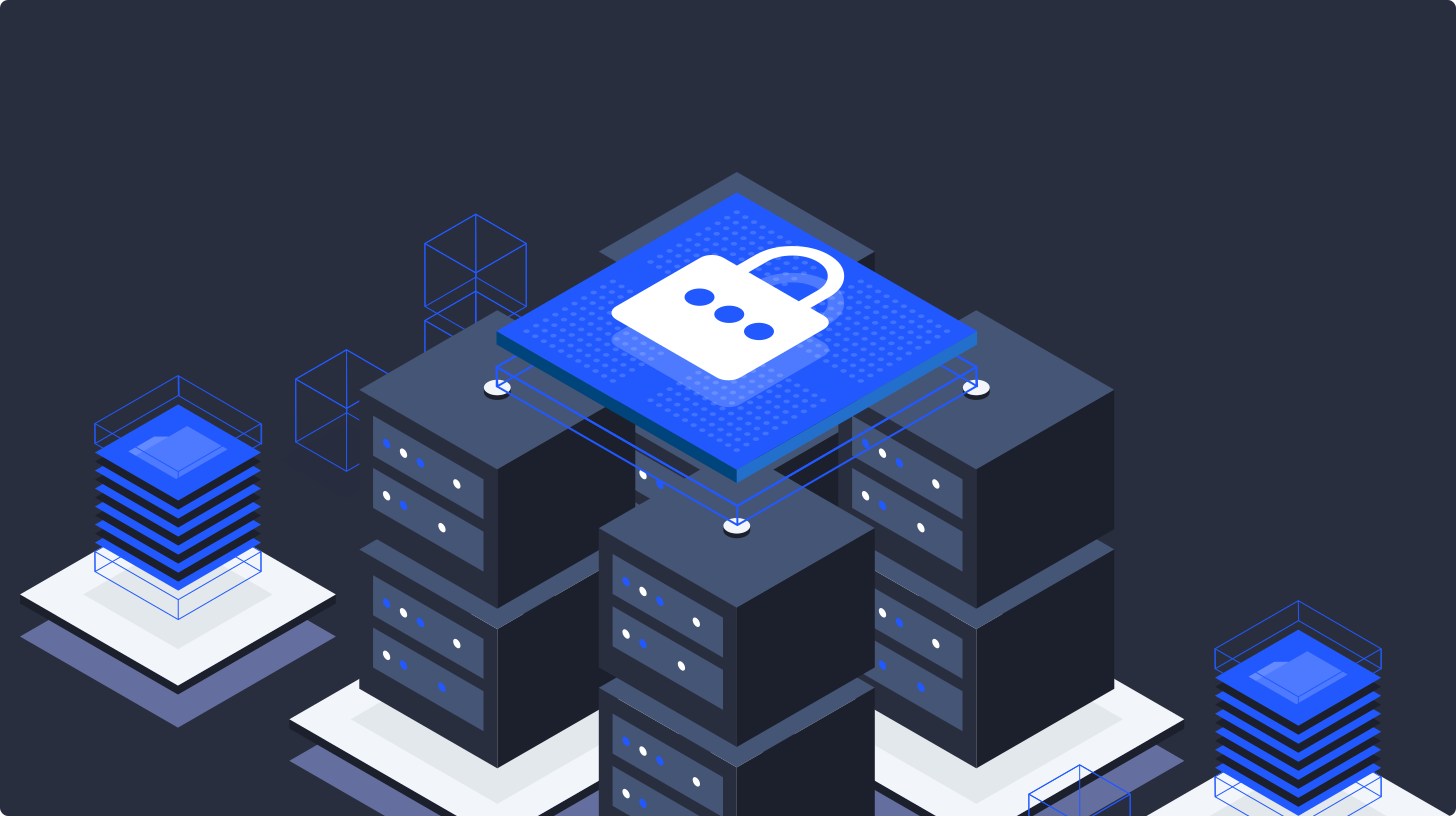
inabit uses hardware-based Trusted Execution Environments (TEEs), via Google Cloud Confidential Space + AMD SEV - ensuring private keys are generated, stored, and used inside secure enclaves. Even inabit staff cannot access raw keys or sign transactions without going through the secure enclave.
Transactions are signed from within the secure environment; the private keys never leave encrypted memory, mitigating risk of theft, insider attack, or external breach.
Self-Custody for Real, Not Just Marketing
You - your business or wallet owner - control the keys. inabit never holds custody of funds or retains signing permissions.
The system supports typical enterprise needs: multi-wallet support, multi-chain assets, on/off ramps, policy-based authorization, role-based access, audit logs and compliance support - but without sacrificing custody ownership.
Integration + Speed + Flexibility
Unlike building from scratch (which is slow and error prone), inabit provides ready-to-use wallet infrastructure, APIs, compliance modules and fiat on/off ramps - letting your business go live with secure self-custody fast.
You get full control over funds, but also enterprise-grade tooling: dashboard, policy/approval flows, chain abstraction, multi-asset support.
5. Self-Custody Best Practices — What You Should Always Do
Having control over your keys is powerful - but with great power comes great responsibility. Whether you’re an individual or an enterprise, here are some best practices to ensure self-custody stays safe:
Use secure hardware wallets or TEE-backed solutions (rather than plain software wallets) wherever possible.
Backup your seed phrase / keys offline - never store them in cloud storage, email, or plain files.
For business funds or large balances - use multisig wallets, role-based access, and approval workflows to avoid single-point-of-failure.
Maintain separate wallets/accounts for different purposes (e.g., operational funds, treasury, user liabilities) to minimize blast radius in case of a breach.
Keep software and dependencies updated; restrict access; use dedicated secure devices - treat crypto custody like managing a bank vault, not a spreadsheet.
6. Why Self-Custody Matters - Not Just for DeFi Purists, But for Real-World Businesses
Full Ownership & Risk Isolation - when you control keys, you’re not exposed to third-party insolvency, legal pressure, or pooled-asset failures. Risk boundaries are defined.
Transparency & Auditability - on-chain records + internal logs + compliance modules give clear, traceable audit trails. Great for accounting, compliance, and regulatory readiness.
Flexibility & Control — move funds when you want, across chains, across protocols. No gatekeeper delays or withdrawal limits.
Decentralization Ethos + Practical Security - self-custody embodies crypto’s original spirit: financial sovereignty. But with inabit’s infrastructure, you get it with enterprise-grade security and usability, not just as a niche “power user” feature.
7. inabit’s Self-Custodial Wallets - Your Key to True Ownership
If you’re a business, fintech, payment provider, or enterprise exploring crypto - you no longer need to choose between “easy but risky custodial” or “secure but slow DIY.” With inabit’s Self-Custodial Wallet infrastructure, you get:
Private-key ownership (you hold keys, not us).
Hardware-backed key security (TEEs) + encrypted wallet operations.
Support for multiple blockchains, tokens, on/off-ramp flows, compliance, and fiat conversion.
Enterprise features: multi-user governance, policy/approval flows, real-time dashboards, and audit logs.
Fast go-live: ready APIs, front-end wallet UI, and integration with fiat rails - no need to build wallet infra from scratch.
8. Conclusion - Own Your Keys, Own Your Crypto
Crypto was built on the ideal of financial sovereignty. But that ideal only holds if you control the keys. Relying on custodial services, pooled wallets, or custodial gateways may feel safe and easy - until it’s not. History has shown that hacks, insolvencies, and regulatory pressure can strike hard and fast.
Self-custody - when implemented with care, discipline, and enterprise-grade infrastructure - offers the security, transparency, and control required for real-world crypto businesses.
If you believe in true ownership, want to minimize third-party risk, and need a scalable, secure, compliant treasury or payment infrastructure - consider self-custody with inabit. Because at the end of the day: your keys = your crypto.
Ready to take full control of your digital assets?
[Get started with inabit Self-Custodial Wallets]